
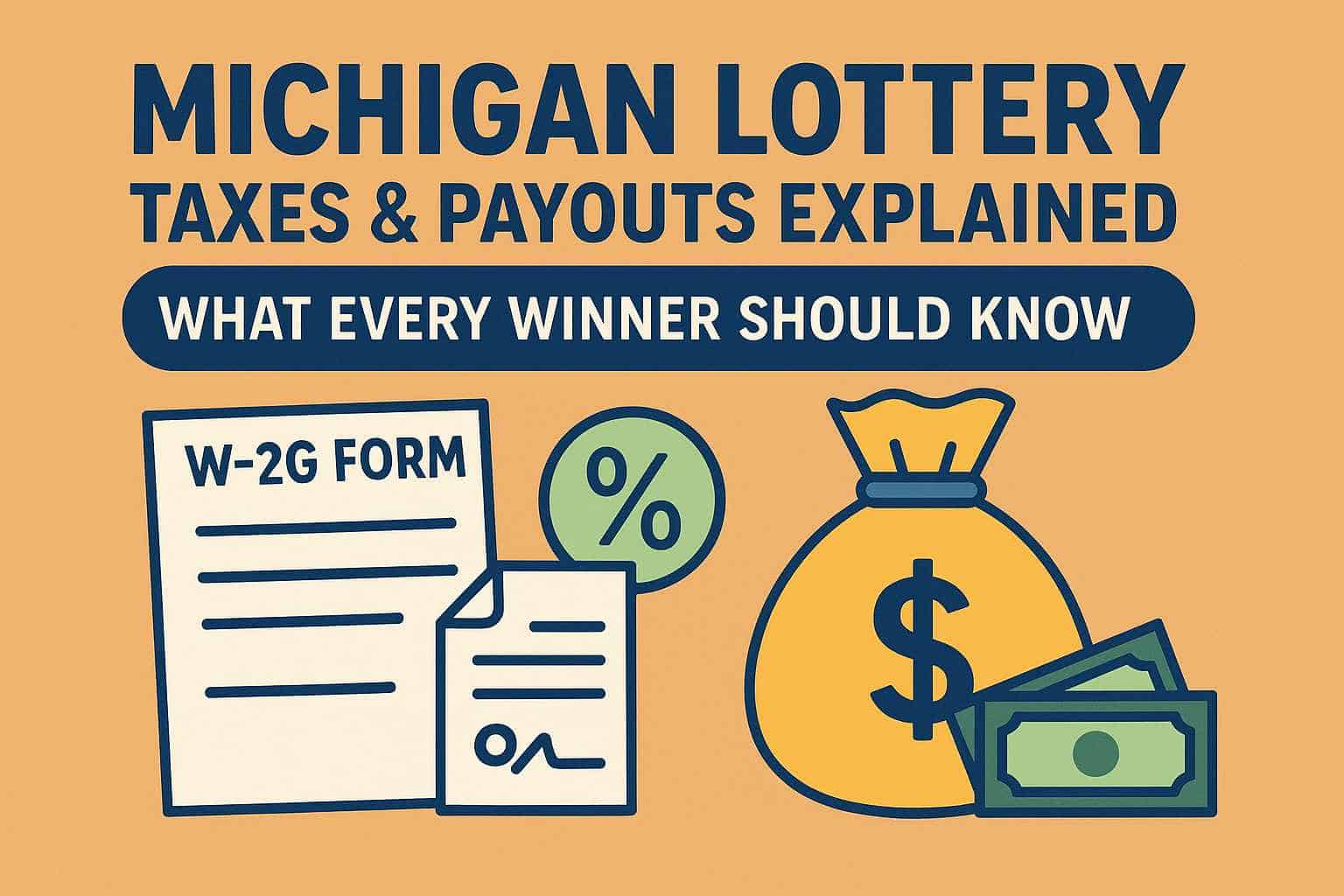
Michigan Lottery Tax Rules: What Every Winner Should Know
Winning the Michigan Lottery is exciting, but taxes are part of the process. Understanding Michigan Lottery Tax Rules helps you plan ahead, file correctly, and keep more of your winnings. This guide covers W-2G forms, withholding rates, payout timelines, and practical ways to handle taxes responsibly.
We may receive commissions for referring you through links on this page. This does not affect our opinions or recommendations.
Summary
Prizes over $600 are reported to both the IRS and Michigan Treasury. The Lottery withholds 24% for federal and 4.25% for state taxes on winnings above $5,000. Knowing these Michigan Lottery Tax Rules keeps players prepared during tax season.
Exclusive Michigan Lottery Offer
Michigan residents 18+, use Promo Code MICHIGAN20 to claim 20 FREE games of Blazing Red 7’s with no deposit required.
Depositing players also receive a 50% match up to $100. Therefore, you enjoy more play value while keeping your budget under control.
How Michigan Lottery Tax Rules Affect Payouts
Each Michigan Lottery game pays differently. Instant tickets offer immediate payouts. Powerball and Mega Millions winners can choose between a lump sum and annual payments. Taxes apply as soon as you claim your prize. The Lottery reports prizes over $600 using a W-2G form for both state and federal records. Smaller wins also count as taxable income, so include them when filing your return.
Understanding Michigan Lottery Tax Rules
The Michigan Lottery withholds 24% for federal and 4.25% for state taxes on prizes above $5,000. You’ll receive a W-2G showing your total winnings and tax withheld. Keep this document in a safe place. It will make your tax filing faster and easier. Smaller prizes are still taxable even when no form is issued. Because tax brackets differ by income, saving a portion of each win helps you stay prepared for any extra owed later.
How to Claim Prizes Under Michigan Lottery Tax Rules
Prizes up to $600 can be redeemed at licensed retailers. Winnings between $601 and $99,999 are claimed online or at a regional Lottery office. Jackpots of $100,000 or more must be claimed in person at the Lansing headquarters. Bring your winning ticket, photo ID, and a claim form. Official details are available on the Michigan Lottery Claim a Prize page. Claiming online can be faster and safer, especially for mid-size wins.
Federal and State Michigan Lottery Tax Rules
The IRS treats lottery income as taxable. Therefore, the Lottery automatically withholds both federal and state taxes during payout. If you live outside Michigan, check whether your home state taxes lottery income too. In addition, keeping copies of your W-2G forms prevents reporting errors. For example, if you misplace your form, you can request a replacement from the Lottery’s Player Relations Division.
How Michigan Lottery Tax Rules Impact Jackpot Planning
Winning a large jackpot changes your finances instantly. However, tax planning determines how much you keep. Choosing between a lump-sum payment and annuity is one of the biggest decisions. A lump sum provides fast access to money but may push you into a higher tax bracket. An annuity spreads income over time, which could lower your yearly tax bill. Moreover, setting financial goals early helps you make the most of your winnings.
When to Expect Your W-2G Form
The Michigan Lottery mails W-2G forms each January for the previous year’s winnings. If you win late in December, your form will arrive the next month. Verify your address to avoid delays. You can also download a digital copy from your Lottery account. Having this form ready before you file ensures your tax return matches official records and avoids unnecessary audits.
Michigan Lottery Withholding Example
Here’s a quick example of Michigan Lottery Tax Rules in practice. Suppose you win $50,000. The Lottery withholds $12,000 for federal and $2,125 for state tax. Your net payout is $35,875. Setting aside extra money for taxes ensures you won’t owe more later. Furthermore, keeping receipts and claim confirmations supports accurate reporting during tax season.
Group Winners and Shared Tickets
When a group shares a winning ticket, each person files separately. The Lottery issues individual W-2G forms so every player reports only their share. This prevents one member from paying taxes on the full amount. In addition, documenting how the group divides prizes avoids confusion when filing returns.
Common Mistakes When Filing Michigan Lottery Tax Rules
Some players forget that the IRS already has their prize information. As a result, skipping lottery income on your return can lead to a correction notice. Others forget to include smaller prizes under $600, which are still taxable. Moreover, many winners ignore potential deductions for gambling losses. Keeping bank statements, tickets, and receipts throughout the year helps offset winnings at tax time.
Responsible Planning After Paying Lottery Taxes
Once taxes are complete, think long term. For instance, paying off debt, creating an emergency fund, or investing for the future helps your prize go further. In addition, meeting with a CPA who understands lottery income ensures you stay compliant and use your funds wisely. Responsible play and preparation make every win more rewarding.
Did You Know?
- The Michigan Lottery has contributed more than $27 billion to public education since 1972.
- All prizes above $600 are reported to both the IRS and Michigan Treasury.
- Major winners cannot remain anonymous in Michigan.
Conclusion
Knowing the Michigan Lottery Tax Rules helps every player stay confident and prepared. Understand how taxes work, keep your W-2G forms, and plan for long-term financial goals. For more insights on budgeting and responsible play, visit the cornerstone hub Michigan Lottery Secrets. You can also explore our Michigan Lottery Calculator Hub for interactive tools that estimate payouts, lump-sum values, and tax withholdings.
This article is for educational purposes only and should not replace professional financial or legal advice. Always consult a qualified tax professional before filing returns or claiming large prizes.
Explore Michigan Lottery Tools & Promotions



Affiliate disclosure: Some links may be sponsored. If you click and sign up, we may earn a commission at no extra cost to you.
Play responsibly. If you or someone you know has a gambling problem, call the Michigan Problem Gambling Helpline at 1-800-270-7117 or the Virginia Problem Gambling Helpline at 1-888-532-3500.
For details on our editorial policies, affiliate partnerships, and responsible play standards, read our Legal Compliance Hub.
Share this post: